%3Aformat(webp)%2Fheader_media%2Fc3743351-0cbe-486f-8fd5-1ec3c554c33a-pexels-kelly-19063459.jpg&w=1920&q=75)
Yes, two weeks covers both countries — provided you travel south in a straight line and resist adding a beach.
Our fourteen-day route runs the length of Vietnam from Hanoi to Ho Chi Minh City, then crosses into Cambodia for Angkor. It works because it never doubles back: each move is one step further south, and the two internal flights are short.
What it does not do is pretend you can also fit in Laos, the Cambodian coast or a week on a beach in Phu Quoc. Those need their own trip.
In short
Days 1–3 — Hanoi and the north. The old quarter of Hanoi, then out to the Hoa Binh region, and a walk through the rice valleys and cave tunnels of Ninh Binh.
Days 4–5 — Ha Long Bay. An overnight junk cruise among the limestone karsts, then the journey on to Hue.
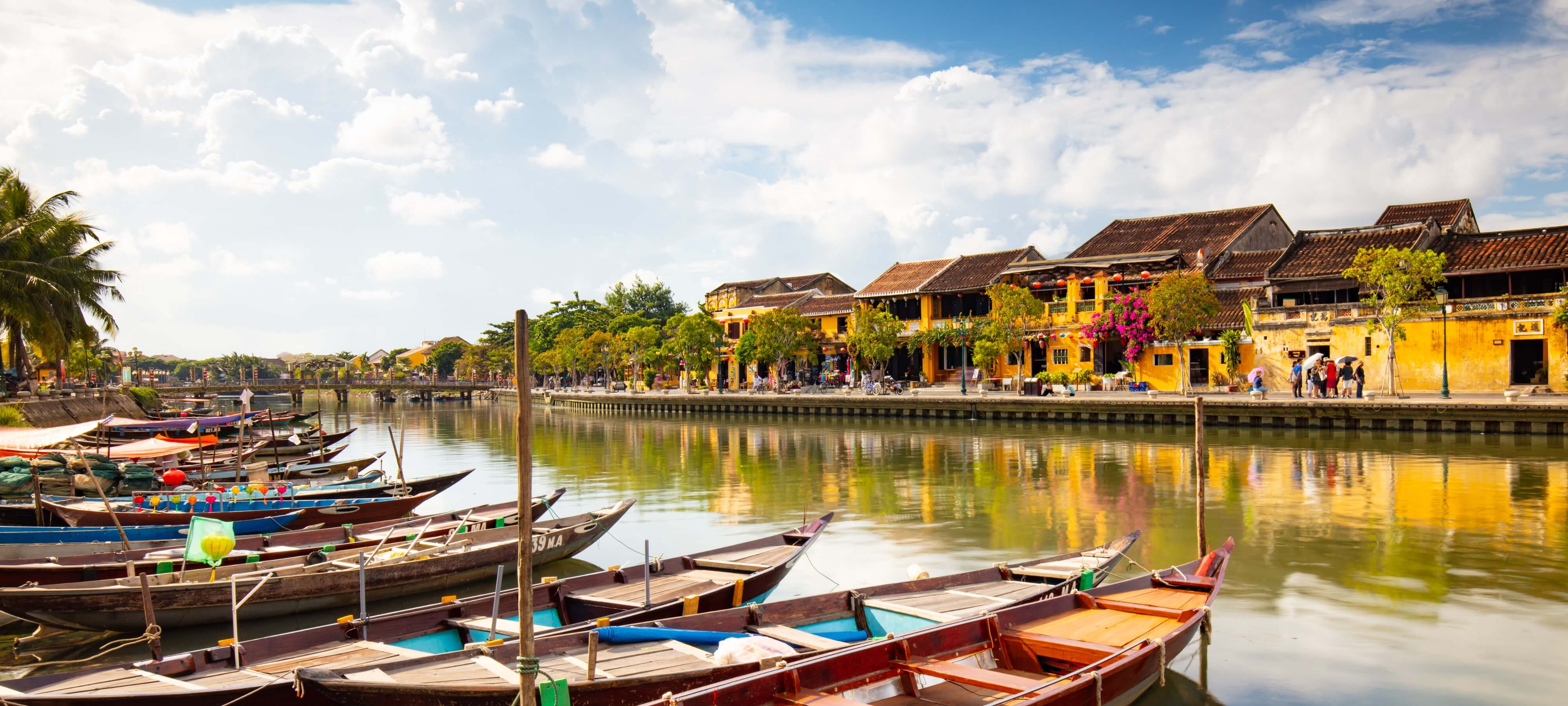
Days 6–8 — the imperial centre. Behind the scenes of the imperial city of Hue, over the Hai Van Pass, and two days in Hoi An — old trading port, lantern-lit streets and one of the best places to eat in Southeast Asia.
Days 9–11 — the south. The Mekong Delta by boat among the coconut palms, then Ho Chi Minh City: a motorbike ride through the traffic, a Saigon beer, the café scene and the street food.
Days 12–14 — Cambodia. Into Siem Reap, an evening at Cambodia's social-enterprise circus, and a day among the temples of Angkor. A final morning in Siem Reap before flying home.
%3Aformat(webp)%2Fhubspot_blogs%2F48192275530-JimThompsonHouse2.jpg&w=1920&q=75)
Most travellers do Vietnam north to south, and there is a good reason beyond geography.
Starting in Hanoi means starting with the older, denser, more traditional Vietnam, and finishing in Ho Chi Minh City, which is faster, newer and louder. That progression makes sense as a story, and it makes sense practically — you arrive jet-lagged into the smaller, calmer of the two big cities.
Ending in Cambodia rather than starting there matters too. Angkor is the single most overwhelming thing on the itinerary, and it lands better once you have spent a fortnight in the region than it does on your second morning.
There is a weather argument as well: north and south Vietnam have genuinely different climates, and travelling between them over a fortnight usually means at least one of the two is at its best.
%3Aformat(webp)%2Fnavi_link%2F87ff2f3b-cf71-4af6-aece-a7affe81434b-3000x2000-64.jpg&w=1920&q=75)
Being straight about this is more useful than a longer list of highlights.
Beaches. There is no beach stay in this itinerary. Vietnam and Cambodia both have wonderful coastline, and it needs days we do not have.
Sapa and the far north. The mountain trekking country above Hanoi is a three-day round trip on its own.
Laos. A frequent question, and the honest answer is no — not in two weeks, not without gutting the rest.
More than one day at Angkor. You get a proper day among the temples with a guide. Angkor rewards three. If that is your main reason for going, say so and we will talk about extending.
And a practical note: this is a hot and often humid part of the world. The itinerary is paced with that in mind, but it is a real factor for travellers who struggle in heat.
Two regional flights are included — Danang to Ho Chi Minh City, and Ho Chi Minh City to Siem Reap — along with the train from Hue to Danang and the overnight junk cruise in Ha Long Bay. All of that is in the price.
Your international flights are not: like all our UK tours this one is land-only, so you fly from the airport that suits you. We publish recommended routes, airlines and timings for this specific tour. It is an open-jaw trip — into Hanoi, home from Siem Reap — so book it as a multi-city ticket rather than a return.
Groups are capped at 12 travellers, with an English-speaking Asiaventura tour leader throughout, and the tour runs on guaranteed departures — it goes ahead regardless of how many others have booked.

%3Aformat(webp)%2Ftravel_report_photo%2F82613%2F9bd8b7f8-efbf-47a0-8bac-85692944c35d-156B2013-99D6-42A0-9D70-16482BDABD13.jpg&w=1920&q=75)