%3Aformat(webp)%2Fhubspot_blogs%2F79080211244-AngkorWatcambodiajungle1cut.jpg&w=1920&q=75)
But did you know that Kipling's 'Lost City of the Monkeys' with King Louie is based on — or at least inspired by — the tales of a real 'lost' city?
That city is Angkor Wat!
It is the largest temple city in the world, bringing together almost 1,000 different historical buildings and temples across an area of 350 square kilometres. Angkor lies around 240 kilometres north-west of Cambodia's capital, Phnom Penh, near Siem Reap. The city's structures were built between 802 and 1295 under the Khmer Empire.
%3Aformat(webp)%2Fhubspot_blogs%2F79080211244-Angkorwat1.jpg&w=1920&q=75)
Source: Canva
In the Middle Ages, more than half a million people lived in Angkor, making the city a true global metropolis. The lavish decorations can still be seen on the temple walls today: dancing Shivas, smiling Buddhas, Hindu gods and portraits of the kings of the time gaze down at visitors from the partly enormous monuments.
%3Aformat(webp)%2Fhubspot_blogs%2F79080211244-Angkorwat.jpeg&w=1920&q=75)
Source: Canva
%3Aformat(webp)%2Fhubspot_blogs%2F79080211244-BannerMain6angkorwat.jpg&w=1920&q=75)
Source: Canva
To this day, thick tree trunks, lianas and tropical plants wind their way through many parts of the complex. It is therefore hardly surprising that monkeys feel especially at home around the temple grounds. Although they do not sing as they do in The Jungle Book, they mingle fearlessly among the visitors and are happy to be fed bananas and other fruit.
%3Aformat(webp)%2Fhubspot_blogs%2F79080211244-AngkorWatmonkeycambodia2.jpg&w=1920&q=75)
Source: Canva
Although the entire temple complex is sometimes referred to collectively as Angkor Wat, Angkor Wat is, strictly speaking, one specific temple — namely the main temple with its five towers. Through the geometric arrangement of artificial lakes, dams and moats, a gigantic irrigation system was created for the rice fields, providing a means of regulating the vast quantities of water that fell during the monsoon rains.
This enclosed the temple mountains, palaces and residential areas of the great city of the time. The temples are dedicated to Hindu gods and to the Buddha. They symbolise the centre of the universe, Mount Meru, and the king identified with it.
%3Aformat(webp)%2Fhubspot_blogs%2F79080211244-AngkorWatcambodia1.jpg&w=1920&q=75)
Source: Canva
Angkor Wat is part of a much larger overall complex containing a wealth of historical structures. Behind Angkor Wat lies the nearby archaeological park, which stretches over 400 km², including an area of forest. The park contains the magnificent remains of the various capitals of the Khmer Empire from the 9th to the 15th century. Besides Angkor Wat, it also includes Angkor Thom and the Bayon temple with its countless sculptural decorations.
A particularly special part of the complex is the half-ruined group of buildings known as Ta Prohm, which consists of a temple, a monastery and several smaller buildings. The restorers who began renovating the temples in modern times decided to leave this temple in the state in which they had found it. The vegetation and the fallen masonry were therefore cleared and secured only to the extent necessary for visitors to walk through the site. Particularly impressive are the strangler figs and the even larger tetrameles trees, whose roots grow over entire buildings.
%3Aformat(webp)%2Fhubspot_blogs%2F79080211244-TaProhmAngkorWatcambodia3.jpg&w=1920&q=75)
%3Aformat(webp)%2Fhubspot_blogs%2F79080211244-pexelsjuliavolk5769407s.jpg&w=1920&q=75)
Source: Canva
Countless other temples, walls, moats, libraries and various kinds of structures invite you to explore. Among them is the Bayon temple complex, the geographical and spiritual centre of the ancient city. It was built by the Khmer king Jayavarman VII. The temple's most striking architectural feature is the roughly 200 enormous faces gazing down from around 50 towers. Added to these are beautifully crafted reliefs depicting everyday life in 12th-century Cambodia.
%3Aformat(webp)%2Fhubspot_blogs%2F79080211244-bayonAngkorWatcambodia.jpg&w=1920&q=75)
Source: Canva
The Terrace of the Elephants was likewise built by the Khmer king Jayavarman VII. It stands within the old city wall of Angkor Thom and is renowned for its exquisite stone carvings. The 3-metre-high terrace takes its name from the impressively depicted elephants that adorn its walls.
Given the size of the entire temple site, you should be sure to allow yourself plenty of time for your visit, for there are few places in the world where centuries-old history can be experienced as intensely as in Angkor.
Bear in mind, too, that the site — as vast as it is — is a hugely popular destination for tourists from all over the world. If you would like to avoid the crowds, it is therefore best to travel in the low season.
%3Aformat(webp)%2Fhubspot_blogs%2F79080211244-angkorwatbikeladysiemreapcambodia.jpg&w=1920&q=75)
Source: Canva
Between November and April, the dry season prevails in the region around Angkor. This means that the sun shines for up to nine hours a day and temperatures range between 30 and 36 degrees.
From May onwards, however, it becomes considerably wetter with the onset of the rainy season. This does, though, mean that fewer tourists are to be expected. As a result, you can then enjoy parts of the site in complete peace. But even in high season there are ways to avoid the crowds of tourists.
Watching the sunset is a truly special experience. The evening sun casts a beautiful reddish light over the mystical stone formations.
%3Aformat(webp)%2Fhubspot_blogs%2F79080211244-AngkorWatcambodialotus.jpg&w=1920&q=75)
Source: Canva
In short, Angkor Wat is well worth a visit — and not only for fans of The Jungle Book. The 'lost city', or 'city of temples', is one of the most breathtaking and awe-inspiring sites you will ever see.
Let yourself be amazed by the magnificent architecture and craftsmanship of this complex set amid the jungle.
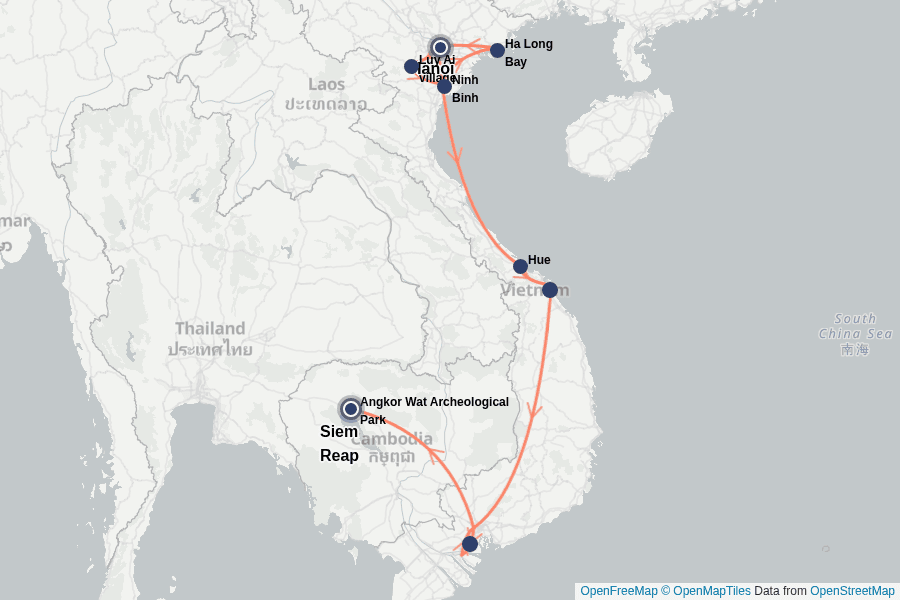
If this article has sparked your interest, be sure to take a look at our 16-day Vietnam–Cambodia tour and 18-day Laos–Cambodia tour, on which we also visit the mystical temple city of Angkor. There are also many other fascinating places and experiences to discover, far off the usual tourist trail!
Contact us
We’d love to hear from you. Please fill out this form.
All fields marked with (*) are mandatory.
%3Aformat(webp)%2Fheader_media%2Fe7def509-8677-4ac0-81c8-fa653e19ce37-myanmar-bagan-banner.png&w=1920&q=75)
%3Aformat(webp)%2Fdestination%2F6d03011d-2f9a-4acf-bafd-15a2c9244bd6-adobestock_122754448-1-.jpg&w=1920&q=75)
%3Aformat(webp)%2Fheader_media%2F780c72b1-255a-46fe-9ac0-b2320fc21a4a-timelinecycle-1-.jpg&w=1920&q=75)
%3Aformat(webp)%2F36886ef5-5e69-4420-84fb-0adbc5078dd4-asia_ventura_logo_1200px_full_color.png&w=1920&q=75)
%3Aformat(webp)%2Fday_detail%2F513e6e8d-24fa-4dca-bb59-ecd3b68638da-8791slide33.jpg&w=1920&q=75)
%3Aformat(webp)%2Fimg%2F2048x1536%2F5c92be4b6ca64.jpg&w=1920&q=75)
%3Aformat(webp)%2Fhubspot_blogs%2F79080211244-bayonAngkorWatcambodia.jpg&w=1920&q=75)
%3Aformat(webp)%2Fhighlight%2F3174da1c-4b15-4522-8976-4192e421e767-japanese-bridge-hoi-an-hoian-vietnam-33-1-.jpg&w=1920&q=75)
%3Aformat(webp)%2Fheader_media%2F1cbb633f-14e5-41cc-93b2-d181d059c9e4-pexels-d-ng-nhan-324384-1102398.jpg&w=1920&q=75)
%3Aformat(webp)%2Fmedia-admin%2F38700cac-d9b9-48fc-9f31-1cecc2e47a1b-cambodia-people-friendly-cut.jpg&w=1920&q=75)
%3Aformat(webp)%2Fheader_media%2F7fe37920-678f-438f-8a90-458b92a0982a-architecture-asian-architecture-temple-door-wallpaper-6bd69c6db3317f6955b46bc9fdac8ce0.jpg&w=1920&q=75)
%3Aformat(webp)%2Fheader_media%2Fa48fa6e2-4e1d-41b2-b802-61158f99fbc1-img_5076.jpg&w=1920&q=75)
%3Aformat(webp)%2Ftravel_report_photo%2F82613%2F9bd8b7f8-efbf-47a0-8bac-85692944c35d-156B2013-99D6-42A0-9D70-16482BDABD13.jpg&w=1920&q=75)