%3Aformat(webp)%2Fhubspot_blogs%2F73392055601-4May16202202183478PM.png&w=1920&q=75)
Take a look at any list of the ten most beautiful Thai islands and you will probably spot Koh Lanta among them. Renowned for its laid-back bohemian vibe, it is not exactly an island for partying.
It might just be the island you have been dreaming of: friendly, cultured people and white-sand beaches, perfect for relaxing, swimming, snorkelling and scuba diving.
The island is made up of two parts, which have been linked by a bridge since 2016: the northern island of Lanta Noi and the main southern island of Lanta Yai. Another bridge is currently planned to cross the Strait of Malacca and connect to the mainland province of Krabi.
If you search online for 'Koh Lanta', you are sure to come across information about the long-running reality TV show, Koh-Lanta, which is currently filmed in Cambodia, although the original 2001 series was filmed on location on Koh Rok, a small island off Ko Lanta Yai.
The best time to visit Koh Lanta is arguably between November and April, as it is not as hot as the rest of the year and there is always a pleasant breeze on the beach. Sea temperatures stay constant all year round, at around 29°C. The sky is blue during the day and the nights are clear, scattered with countless stars to gaze at. The rainy season runs from May to December, when the water can be a little less clear.
%3Aformat(webp)%2Fhubspot_blogs%2F73392055601-1May16202201191771PM.jpg&w=1920&q=75)
The origins of the name 'Koh Lanta' have been lost in the mists of time, but it may come from a Javanese word for a special sieve used in drying fish, called the lantus. This method of preserving food is still used during the monsoon by the Moken.
The islands' rich history of cultural diversity goes back to the sailors from China and the Arab mainland who used the island as a stopping point on their trade routes. Some of the old Chinese houses still stand in the picturesque old town of Koh Lanta, the port on the east coast of the island.
You may be lucky enough to catch sight of flotillas of traditional boats called kabang. These are skippered by a semi-nomadic, hunter-gatherer people, the Moken, who are also known as sea gypsies. It is thought that they migrated to Thailand from southern China around 4,000 years ago. They have traditionally lived on hand-built wooden boats for most of the year, migrating between the islands. Today fewer than 3,000 remain in total.
%3Aformat(webp)%2Fhubspot_blogs%2F73392055601-tsoureki1.jpg&w=1920&q=75)
Don't forget to catch a performance of the traditional dance and musical style known as rong-ngeng. According to the locals, it is at its most authentic on the islands, where the lyrics are in Malay. This social phenomenon of music and dance emerged after the Second World War, when traditions from distant lands mingled with one another.
It incorporates elements of early Western dance and is accompanied by violins, melodic Arab and Javanese drums and Chinese gongs. At its peak, which lasted until the 1960s, rong-ngeng troupes travelled back and forth across the whole region, performing daily in all kinds of venues, including market towns and on village commons, with some performers becoming local stars. The tradition began to die out but has, luckily, enjoyed a revival since the start of the new millennium.
Whether you are here to party under the moonlight, snorkel or scuba dive, or simply to spend peaceful days lazing around, there are so many wonderful beaches that it is hard to rank them. Even so, you would do well to visit one of the ten most beautiful beaches on Koh Lanta, where you are almost guaranteed to see a perfect sunset:
Long Beach, also known as Phra Ae Beach, is probably the most famous beach on Koh Lanta. The 4 km stretch of golden sand is lined with tall pines and the only rocks are at either end. The hotels, bars and restaurants are set back from the beach, nestled among the tall trees and barely visible as you stroll barefoot along the sands. The beach slopes gently down to the shore, where it suddenly drops away to a depth that is perfect for a dip on a hot day. There are cafés along the beach with hammocks, day beds and chairs to relax on with a Thai tea. It is lovely for a long, romantic walk in the evening as the sun sets.
%3Aformat(webp)%2Fhubspot_blogs%2F73392055601-3May16202201191220PM.jpg&w=1920&q=75)
The wonderfully picturesque bay and beach of Kantiang can be seen from the restaurant terraces along the coast road. With white sands and a turquoise, azure sea, this is the setting of the luxurious Pimalai resort. It is especially worth visiting at the first full moon in March, when the 3-day Laanta-Lanta festival takes place. Live bands play and the locals and the resorts' star chefs serve up exquisite snacks and meals.
%3Aformat(webp)%2Fhubspot_blogs%2F73392055601-1May16202201255421PM.jpg&w=1920&q=75)
Klong Dao Beach is one of the most beautiful beaches on Koh Lanta. There are very few rocks and the sea retreats far out at low tide, leaving a broad expanse of almost white, powdery sand.
%3Aformat(webp)%2Fhubspot_blogs%2F73392055601-tsoureki2.jpg&w=1920&q=75)
Klong Nin Beach has a lovely late-afternoon atmosphere and spectacular sunsets to enjoy from the charming little beach bars.
%3Aformat(webp)%2Fhubspot_blogs%2F73392055601-3May16202201255053PM.jpg&w=1920&q=75)
Klong Jark Beach in the far south is perfect for anyone who truly appreciates peace and quiet. It offers a broad expanse of sand, shallow waters, elephant treks and a very scenic walk to a nearby waterfall, which can admittedly be little more than a trickle in high season.
%3Aformat(webp)%2Fhubspot_blogs%2F73392055601-1May16202202183120PM.jpg&w=1920&q=75)
Klong Khong Beach is a three-kilometre stretch of fine sand in the middle of Koh Lanta, and also a good starting point for scooter trips around the island. The beach reveals a few rocks at low tide. Because of its location, Klong Khong has very little tourist infrastructure, though hearty breakfasts are served at the Lazy Lodge, right on the shore. There are no shops or amenities by the roadside. The nearest cash machine or shop is a 10-minute drive away at Kantiang Bay, which is also quiet.
%3Aformat(webp)%2Fhubspot_blogs%2F73392055601-tsoureki3.jpg&w=1920&q=75)
Nui Beach, in the middle of the west coast, is tucked away in a cove and there is just one pretty little beach hut serving refreshments. In high season the white sands glisten and the waters are clear, but from May to November you may find debris washed up on the beach, depending on the weather.
This very beautiful beach should not be confused with the more remote beach in the far south:
Nui Bay, south of Kantiang, cannot be reached by road. There is a fairly steep path down to the beach, around 100 metres long. This slight obstacle to access has kept the beach completely unspoilt. Surrounded by cliffs, this beach is very secluded, a true gem among those of Koh Lanta.
Of course, if you are looking for a peaceful paradise on the tropical island, you cannot go wrong by heading to the national park in the south of the island.
Bamboo Bay is the last beach to appear, an unspoilt treasure with a beautiful white-sand beach at the heart of lush jungle.
%3Aformat(webp)%2Fhubspot_blogs%2F73392055601-3May16202202183273PM.jpg&w=1920&q=75)
Within the national park you will find Ta Naoad Beach, which remains pristine. A breathtaking dream, it may well be the most beautiful beach on Koh Lanta.
%3Aformat(webp)%2Fhubspot_blogs%2F73392055601-4May16202202183478PM.jpg&w=1920&q=75)
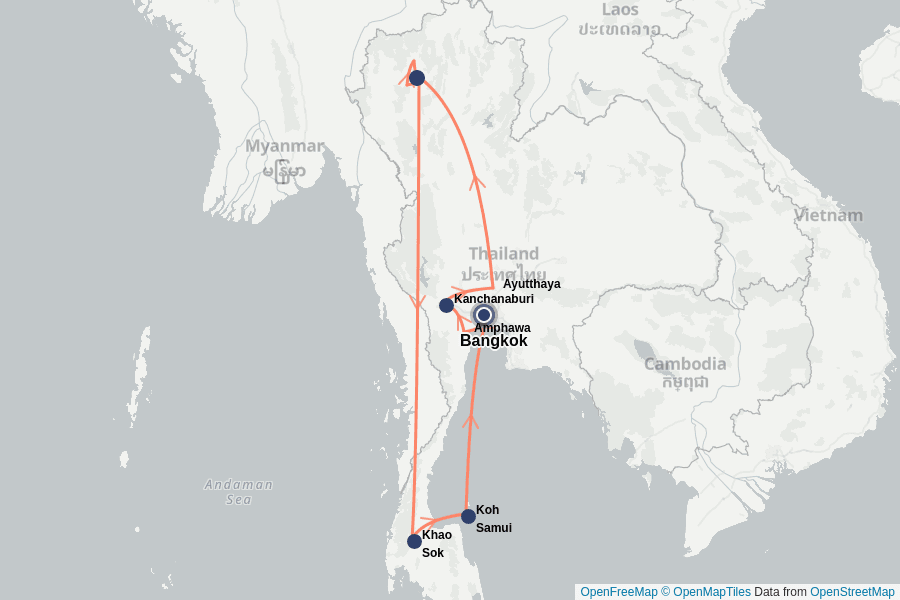
For a 2-week tour through the south of the country and Thailand's most beautiful beaches, take a look:
Explore the highlights and attractions off the beaten track in southern Thailand.
%3Aformat(webp)%2Fhubspot_blogs%2F73392055601-imagepngApr06202206534978PM.jpg&w=1920&q=75)
Venture into nature and relax on quiet or secluded beaches. Visit a renowned destination such as Phuket through unusual activities and treat yourself to paradise spots like Railay, Koh Lanta and Thale Noi.
Contact us
We’d love to hear from you. Please fill out this form.
All fields marked with (*) are mandatory.
%3Aformat(webp)%2Fheader_media%2Fe7def509-8677-4ac0-81c8-fa653e19ce37-myanmar-bagan-banner.png&w=1920&q=75)
%3Aformat(webp)%2Fdestination%2F6d03011d-2f9a-4acf-bafd-15a2c9244bd6-adobestock_122754448-1-.jpg&w=1920&q=75)
%3Aformat(webp)%2Fheader_media%2F780c72b1-255a-46fe-9ac0-b2320fc21a4a-timelinecycle-1-.jpg&w=1920&q=75)
%3Aformat(webp)%2F36886ef5-5e69-4420-84fb-0adbc5078dd4-asia_ventura_logo_1200px_full_color.png&w=1920&q=75)
%3Aformat(webp)%2Fday_detail%2F513e6e8d-24fa-4dca-bb59-ecd3b68638da-8791slide33.jpg&w=1920&q=75)
%3Aformat(webp)%2Fimg%2F2048x1536%2F5c92be4b6ca64.jpg&w=1920&q=75)
%3Aformat(webp)%2Fhubspot_blogs%2F79080211244-bayonAngkorWatcambodia.jpg&w=1920&q=75)
%3Aformat(webp)%2Fhighlight%2F3174da1c-4b15-4522-8976-4192e421e767-japanese-bridge-hoi-an-hoian-vietnam-33-1-.jpg&w=1920&q=75)
%3Aformat(webp)%2Fheader_media%2F1cbb633f-14e5-41cc-93b2-d181d059c9e4-pexels-d-ng-nhan-324384-1102398.jpg&w=1920&q=75)
%3Aformat(webp)%2Fmedia-admin%2F38700cac-d9b9-48fc-9f31-1cecc2e47a1b-cambodia-people-friendly-cut.jpg&w=1920&q=75)
%3Aformat(webp)%2Fheader_media%2F7fe37920-678f-438f-8a90-458b92a0982a-architecture-asian-architecture-temple-door-wallpaper-6bd69c6db3317f6955b46bc9fdac8ce0.jpg&w=1920&q=75)
%3Aformat(webp)%2Fheader_media%2Fa48fa6e2-4e1d-41b2-b802-61158f99fbc1-img_5076.jpg&w=1920&q=75)
%3Aformat(webp)%2Fheader_media%2Fe5081183-c269-4c56-8361-915d99fc6089-fotor_creation_2025-08-21-5-.jpg&w=1920&q=75)
%3Aformat(webp)%2Ftravel_report_photo%2F82615%2F3fa48142-9699-4086-981e-dd7c59059679-9D15969E-D0FD-4CCB-82A7-DCDDE059FD69.jpg&w=1920&q=75)