%3Aformat(webp)%2Ftravel_report_photo%2F82670%2Fb03190a1-7d13-44d9-85d2-015c7d7fd6e7-IMG-20240123-WA0026.jpg&w=1920&q=75)
Temple of Literature ( Hanoi )
Real history in Hanoi
Information about Temple of Literature (Van Mieu)
The Temple of Literature in Hanoi, known as Văn Miếu - Quốc Tử Giám in Vietnamese, stands as a remarkable testament to the country's rich educational and architectural heritage. Founded in 1070 by Emperor Lý Thánh Tông, it was initially constructed as a Confucian temple and later became Vietnam's first national university in 1076. The Temple of Literature was dedicated to Confucius (Khổng Tử), sages, and scholars, serving as a center for higher learning for over 700 years, offering instruction in the principles of Confucianism, literature, and poetry.
This historic site is divided into five courtyards, each with its own unique structures and gardens, designed to symbolize the Confucian path to enlightenment, starting from the mundane and progressing towards the sacred. Notably, the temple houses 82 stone steles mounted on tortoises, which list the names, birth places, and achievements of those who passed the royal exams, highlighting the importance of education and merit in Vietnamese society. The Temple of Literature not only reflects the architectural style of the Lý and Trần dynasties but also represents a tranquil oasis in the heart of bustling Hanoi. Today, it is a popular tourist attraction, revered not just for its historical significance but also as a symbol of knowledge and learning. Visitors are drawn to its serene atmosphere, traditional Vietnamese architecture, and the rich cultural heritage it embodies, making it an enduring symbol of Vietnam's dedication to education and the arts.
Interesting facts about Temple of Literature (Van Mieu)
Founding and Purpose: The Temple of Literature was established in 1070 by Emperor Lý Thánh Tông and is dedicated to Confucius. It became Vietnam's first national university in 1076, emphasizing the importance of education and serving as a center for Confucian learning and higher education for centuries.
Architectural Significance: Reflecting the architectural style of the Lý and Trần dynasties, the temple is divided into five courtyards, each designed to symbolize the Confucian path from the mundane to the sacred. Its layout includes various halls, pavilions, and libraries, offering a glimpse into Vietnam's feudal education system and architectural heritage.
Stone Steles: The Temple of Literature is home to 82 stone steles mounted on tortoise backs, dating from the 15th to the 18th centuries. These steles record the names, birthplaces, and achievements of those who passed the rigorous royal examinations, highlighting the meritocratic aspect of Vietnamese society and its reverence for academic achievement.
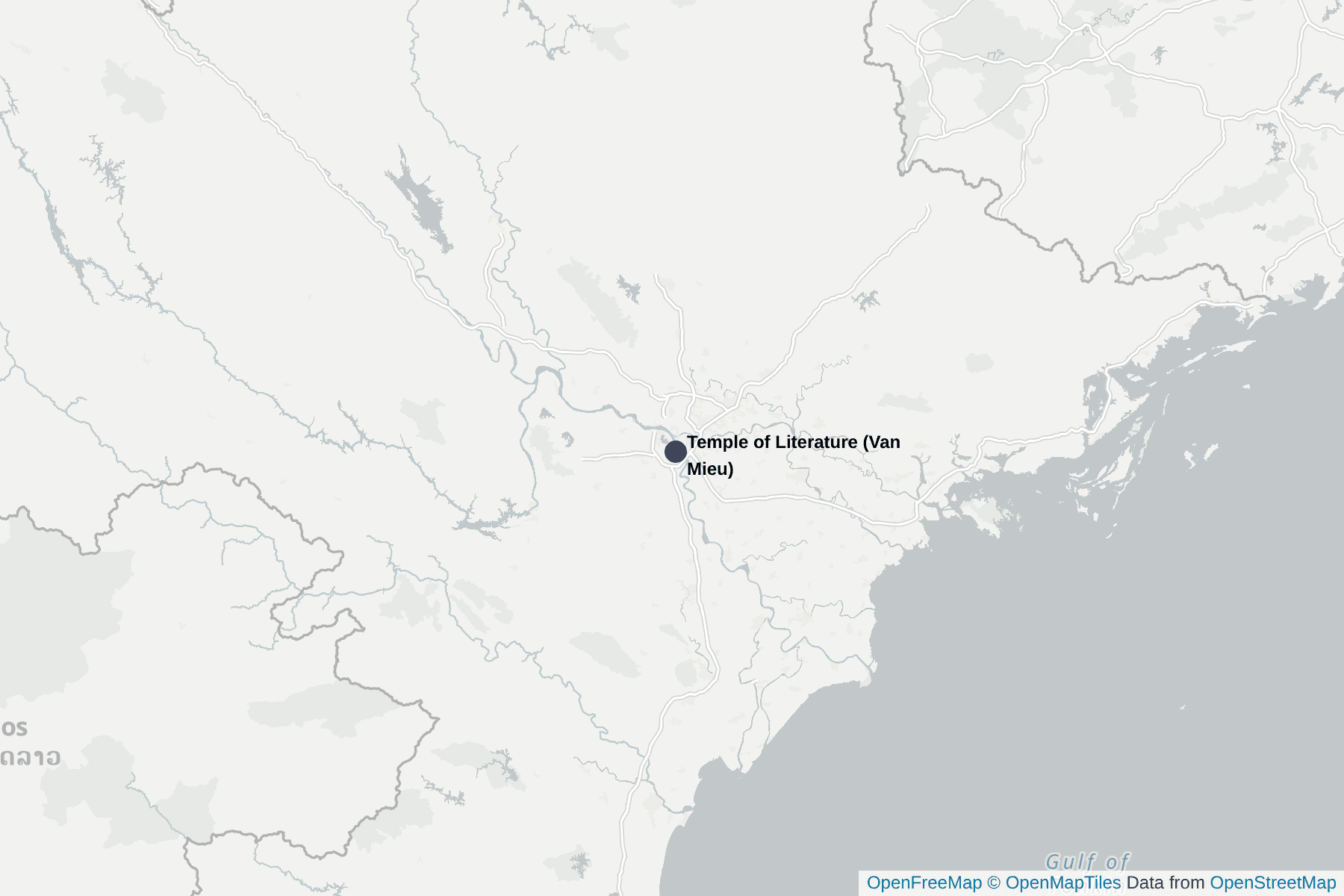
Wo ist Temple of Literature (Van Mieu)?
%3Aformat(webp)%2Fheader_media%2F8181f555-c555-4717-8024-3999d6480c1f-pexels-nghia-van-2147989090-29862182.jpg&w=1920&q=75)
%3Aformat(webp)%2Fday_detail%2F3d54316a-175c-4436-8b84-3141e0f03b4e-1200x1800-4x6-10-.jpg&w=1920&q=75)
%3Aformat(webp)%2Fday_detail%2F508e882b-777a-4916-bcc6-f7c2870e053b-toby-do-2mxwsjaib9g-unsplash.jpg&w=1920&q=75)
%3Aformat(webp)%2Fday_detail%2Fa9524e74-2954-4979-b0c3-14ddbe070e23-pexels-q-h-ng-ph-m-2965773.jpg&w=1920&q=75)
%3Aformat(webp)%2Ftravel_report_photo%2F82670%2Fa179e69e-3858-4922-b608-b890f0405260-IMG-20240123-WA0032.jpg&w=1920&q=75)
%3Aformat(webp)%2Ftravel_report_photo%2F82619%2F47a914e8-b133-4db8-8d63-bc3690a808bc-1707293862823.jpg&w=1920&q=75)
%3Aformat(webp)%2Ftravel_report_photo%2F82619%2Ffe3b1620-b1de-4ace-b1fb-4a64ff020089-1707294153715.jpg&w=1920&q=75)
%3Aformat(webp)%2Ftravel_report_photo%2F78857%2F705f8e71-3b88-4a78-89a1-8b80d0f164e4-IMG-20231111-WA0025.jpg&w=1920&q=75)
%3Aformat(webp)%2Ftravel_report_photo%2F78150%2F68b59f51-2c52-421f-8f63-8be38ef65bbf-1699007649390.jpg&w=1920&q=75)
%3Aformat(webp)%2Fheader_media%2Fa48e50cd-94a3-4a8f-90b6-e26ba4f47d08-pexels-thuan-33934686.jpg&w=1920&q=75)
%3Aformat(webp)%2Fday_detail%2F5e7b8f6e-150d-475e-b9c0-ab5ae2a353b5-hanoi-5-.jpg&w=1920&q=75)