%3Aformat(webp)%2Ftravel_report_photo%2F82670%2Fa179e69e-3858-4922-b608-b890f0405260-IMG-20240123-WA0032.jpg&w=1920&q=75)
Ho chi Minh Mausoleum
Ho chi Minh Mausoleum
Information about Ho Chi Minh's Mausoleum (outside) & Stilt House
The Ho Chi Minh Mausoleum, located in the heart of Hanoi, Vietnam, serves as a monumental final resting place for Ho Chi Minh, the revered founding father of modern Vietnam, known affectionately as "Uncle Ho" to the Vietnamese people. Officially inaugurated on August 29, 1975, the mausoleum is a symbol of the nation's deep respect and enduring devotion to the leader who led Vietnam's campaign for independence from French colonial rule. This austere yet grand structure is inspired by Lenin's Mausoleum in Moscow but incorporates distinct Vietnamese architectural elements, embodying a blend of national pride and socialist ideology.
The mausoleum's exterior is made of grey granite, presenting a solemn and robust facade, while the interior is where Ho Chi Minh's preserved body lies in a glass case, under dim lights, guarded by military honor guards. This site is not only a place of mourning but also a site of pilgrimage for millions of Vietnamese and international visitors each year, who come to pay their respects to Uncle Ho and reflect on his life and legacy. The surrounding Ba Đình Square, where Ho Chi Minh read the Declaration of Independence in 1945, establishing the Democratic Republic of Vietnam, adds to the site's historical significance, making it a central landmark in Vietnamese national identity and collective memory
Interesting facts about Ho Chi Minh's Mausoleum (outside) & Stilt House
Inauguration and Design: The Ho Chi Minh Mausoleum was officially inaugurated on August 29, 1975, in Hanoi, Vietnam. Its design is inspired by Lenin's Mausoleum in Moscow, yet it incorporates distinctive Vietnamese architectural features, presenting a solemn and imposing granite facade that symbolizes the nation's admiration and respect for Ho Chi Minh.
Final Resting Place of Ho Chi Minh: The mausoleum houses the preserved body of Ho Chi Minh, the founding father of modern Vietnam, in a glass case under dim lighting, guarded by military honor guards. This setup allows visitors to pay their respects to "Uncle Ho," reflecting on his contributions to Vietnam's independence and unification.
Symbolic Location: Situated in Ba Đình Square, the site holds profound historical significance as the location where Ho Chi Minh declared the independence of the Democratic Republic of Vietnam on September 2, 1945. This makes the mausoleum not only a memorial but also a poignant symbol of Vietnam's struggle for independence and its ongoing journey as a nation
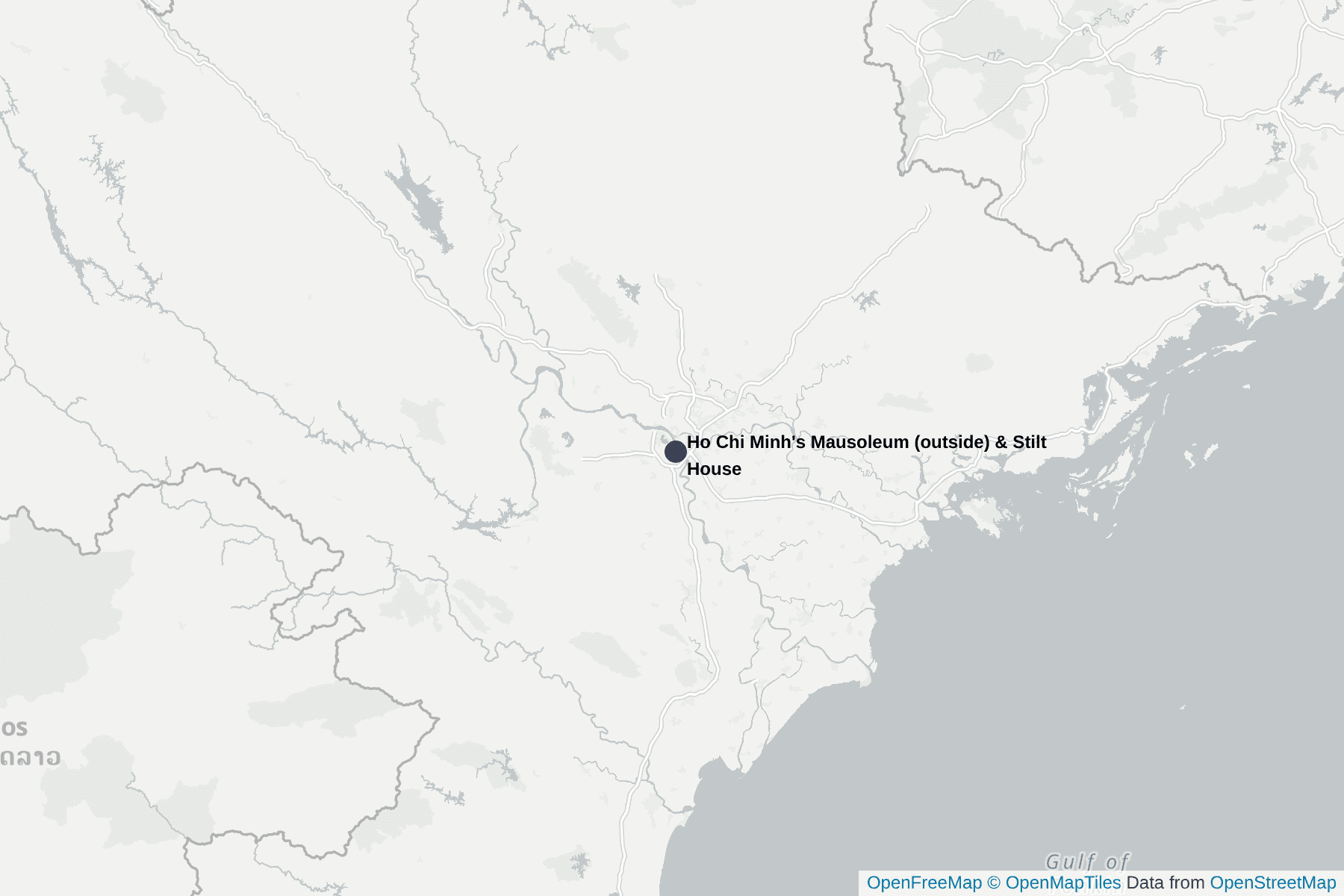
Wo ist Ho Chi Minh's Mausoleum (outside) & Stilt House?
%3Aformat(webp)%2Fheader_media%2F8181f555-c555-4717-8024-3999d6480c1f-pexels-nghia-van-2147989090-29862182.jpg&w=1920&q=75)
%3Aformat(webp)%2Fday_detail%2F3d54316a-175c-4436-8b84-3141e0f03b4e-1200x1800-4x6-10-.jpg&w=1920&q=75)
%3Aformat(webp)%2Fday_detail%2F508e882b-777a-4916-bcc6-f7c2870e053b-toby-do-2mxwsjaib9g-unsplash.jpg&w=1920&q=75)
%3Aformat(webp)%2Fday_detail%2Fa9524e74-2954-4979-b0c3-14ddbe070e23-pexels-q-h-ng-ph-m-2965773.jpg&w=1920&q=75)
%3Aformat(webp)%2Ftravel_report_photo%2F82619%2F47a914e8-b133-4db8-8d63-bc3690a808bc-1707293862823.jpg&w=1920&q=75)
%3Aformat(webp)%2Ftravel_report_photo%2F82619%2Ffe3b1620-b1de-4ace-b1fb-4a64ff020089-1707294153715.jpg&w=1920&q=75)
%3Aformat(webp)%2Ftravel_report_photo%2F78857%2F705f8e71-3b88-4a78-89a1-8b80d0f164e4-IMG-20231111-WA0025.jpg&w=1920&q=75)
%3Aformat(webp)%2Ftravel_report_photo%2F78150%2F68b59f51-2c52-421f-8f63-8be38ef65bbf-1699007649390.jpg&w=1920&q=75)
%3Aformat(webp)%2Fheader_media%2Fa48e50cd-94a3-4a8f-90b6-e26ba4f47d08-pexels-thuan-33934686.jpg&w=1920&q=75)
%3Aformat(webp)%2Ftravel_report_photo%2F82670%2Fb03190a1-7d13-44d9-85d2-015c7d7fd6e7-IMG-20240123-WA0026.jpg&w=1920&q=75)
%3Aformat(webp)%2Fday_detail%2F5e7b8f6e-150d-475e-b9c0-ab5ae2a353b5-hanoi-5-.jpg&w=1920&q=75)